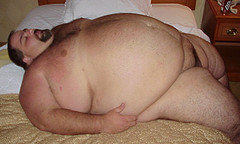
I have long since been attracted to men of bigger sizes. Up until around 6th grade no one was remotely even big. Through out time and high school I saw big people and stared to imagine them shirtless. I thought, back then, I was wrong for thinking it but eventually got over it and assumed it was me. I still had no courage what so ever to act out on desires because it was an all boy Catholic high school. Now I am 23, still a virgin, yet to actually see anything other than what the internet can provide me. I have no friends that are gay or lesbian. Going to my family is out of the question for now. All I want to do is explore for now. I am getting to the point of bursting but I don't know how to act on my desires. I am too afraid of being found out so I never post anything (working on that with a few postings here and there) but I REAAALLY want to start to explore my sexuality outside of masturbation. Any hints or clues as to how I can safely go about meeting people and to not be shy? I feel the community is tight but I am afraid of it for some reason I have.
*******
When I read questions like yours, I think of the poet Anais Nin who wrote: "And the day came when the risk to remain tight in the bud was more painful than the risk to bloom." One of the things I learned growing up in a farming family--corn grows at its own rate. It does you no good to go out into the cornfield and scream, "GROW!" Some people are able to let go of their virginity when they are 16. Others when they are 23. Others when they are decades older. Grow at your own appropriateness. And you know? Perhaps, just perhaps...this is your year to give up your virginity.
I realized long ago, the job of therapists is to give permission to people. We tell them, "It's ok to do this," or--"it's ok to stop doing this."
So--here you go. It's ok for you to explore your sexuality. Here's a scoop of personal disclosure--at one point I asked my first lover, "What do you think would have happened if we had met each others years ago, instead of now?"
And without hesitation, he said, "We would have run away like hell from each other." Here's part of his history...when he moved from the east coast to San Francisco (and he was younger than you are now) he felt a strong attraction to a slightly older, much more experienced man. He wanted a relationship with him. The man told him, "You're not ready for a relationship. Go spread some wild oats. Have sexual experiences so you know what they are. Then come back and see me." And you know what? He did--and the man who gave him this advice was his first actual "lover/partner" (as opposed to his first sexual experience). And just to point out reality...the man was not the one he ended up staying with (which is how he became my first lover...)--but he remained very close to his first lover, and because of him, I became friends with the gentleman as well.
This is just planting a seed that it's likely the guy to whom you lose your virginity will not necessarily be the guy you grow old with. See--here's how things usually get screwed up--for the majority of humans, you grow up around boys and girls. When puberty kicks you in the teeth, you start paying attention to either boys or girls (and to emphasize this issue--BEFORE puberty, girls tend to socialize primarily with other girls, and boys tend to socialize with other boys--to "cross lines" results in screams of "kooties" and there is tremendous social pressure to not "play" with the "opposite" sex. Which tells you there's going to be a problem if little Tony prefers to only socialize with little girls. Anyway, the standard model is--you hit puberty, you develop "puppy love" or "crushes" with kids your age, or with (and this can cause a problem) a teacher/youth group leader/assistant choir director---or another flavor of adult. You go through these "crushes" faster than a guy with a cold can go through facial tissue. Then you get experience, you mature--and then you're ready for a "relationship."
Some therapists believe when you've been hurt--or as we say in the trade, "traumatized"--your psychological/sociological self "freezes" at that point in your life. Let's say at 8 you were sexually abused (and yeah--not talking about you--just giving an example). At the age of 8 your options and your developmental stage are pretty limited. I mean, really--what can an 8 year old do if a 6'2" man decides to abuse him? And trust me, 8 year olds don't have the most realistic grasp of reality. But being "traumatized" at the age of 8 means someone like this has his "options" limited to what an 8 year old would do. And that might include never talking about it--or "acting out" or -- and here's one we see LOTS in the gay community...guys who were so scared they would be "found out" as being different, they tried to throw everyone "under the bus" who was different so no one would notice them. This is one of those "irony" things where you end up discovering the guys who the biggest "fag bashers" in Middle School or High School eventually end up coming out themselves. Unfortunately, they end up leaving a lot of "road kill" of people who were "different" in their journey.
Anyway, based on this model, when a person begins to heal, their "psychological/sociological" clock starts up again, instead of being frozen. This means the person's chronological age will not match their "emotional" age. When the therapy kicks in, the person may be 23 or 33, but emotionally, they may be at the age of say, 12. To put this all together--for heterosexuals, they get to "practice" being in relationships when puberty smacks them. Gay and Lesbian youth will often "freeze," because they feel they can't act out on their true feelings and desires. They focus on school, or sports, or drugs, etc., as a way of funneling the energy that others around them are funneling into dating. When such a guy comes out, his emotional "clock" comes back on-line, but he may now be 23 and his emotional self is 12. What does this mean? One of the stereotypes of gay men is that they are promiscuous and can't form stable relationships. From a therapist's point of view, a lot of gay men, when they first come out may behave the way a young teenager behaves--with lots of crushes, "puppy love," sexual experimentation, and many partners. But what's seen as "normal" for a teenager, is seen as "inappropriate" for an adult male, or there's the idea all a man thinks about is sex.
All of which is to say--being gay in a homophobic society, does not usually give you the opportunity to "practice" being gay at the same time straight kids were able to "practice" being straight. And jeez---you were at an all male Catholic school--which didn't hand you many advantages of forming healthy long term relationships--in other words, you would have been discouraged from forming intimate male relationships, and there really weren't any appropriate intimate female relationships to work with, even if you were straight.
So--again, let's review. As near as I can tell, you weren't dealt the best hand of cards for the person you are. Many people are still virgins at 23--and many people in this category are ready to take the next step of their development, which includes leaving virginity behind.
Let me tell you something that I found amazing at our clinic. At the time the study was done, we were probably considered the best place around to get therapy. That meant the people who could afford the finest of care--saw us, because we were, quite frankly, considered the best the state could offer. I would see top executives from major corporations and then the next hour I would see a couple on welfare. It was the best of experiences for me. Because we had to turn people away, since we simply couldn't see everyone, and because we were part of the university, we had to do a lot of research--we decided to look at what happened not only to patients we treated--but whose we didn't. In other words, we looked at those who tried to book an appointment at our clinic--but who didn't succeed. We never treated them. And you know what? If you tried to make an appointment to see us--and you didn't--you still tended to get better.
I suspect if you are trying to change your life by seeking therapy--whether or not you see the therapist you first try to see--you're already headed in a direction of change. The fact you tell me you don't do a lot of outreach on the Internet--but you e-mail me--tells me you're moving in a very specific direction.
Do you know the function of many seeds? They form a tough protection to the inner seedling, so it will only start to grow when the conditions are right. When there's enough moisture, then there is enough warmth and sunlight--the seedling bursts the seed's covering--and begins to grow. I think you're at this point.
As I mentioned to another person on this blog--Look at your own community's resources. I mentioned gay and lesbian community centers, but also, since you're 23, look at what the colleges and universities in your area (you can check all this out on the internet), offer in terms of support groups for gay or bisexual men who are wondering about coming out, or those who have recently done so. As I responded to someone else on this blog, you've gotten a lot of experience of how NOT to be a happy and healthy gay man. As therapists, if we encounter people who were traumatized at say, the age of 12, and then began therapy at 22, it may take up to 10 years for their "emotional" age to catch up with their chronological age. There are a lot of skills and points of reference you simply can't have as a virgin who tells me you don't know of any gay or lesbian friends. Based on my experience, I will also suggest you may actually HAVE gay or lesbian friends who have hesitated sharing their sexual orientation with you, just as you've decided not to share your orientation with them. When you have more experience being out, you may discover your friends are a lot more like you than you believe now. To put it another way--given the way you've led your life so far--if I knew you through school or work, is there any reason I'd "come out" to you? Is there anything you've ever done that would make me trust you in that way?
At the university where I used to teach, we had a support group called, "I don't think I'm gay, but I know I'm not straight." It was given that title because we knew at the time, if you are say, 23, and you walk through a door that is labeled, "Gay Support Group," you're at a very different developmental stage than someone who is terrified about being "found out" as gay, and feels if his family and friends discover this secret, their response would be complete rejection. The "I don't think I'm gay, but I know I'm not straight" was meant for those who were starting to question what it means not to be "straight" but weren't ready to wear the title of "gay" or "bisexual."
So--go on line. Look at your closest city's gay and lesbian community center or your closest college or university's resources. Speaking as a former university professor, many of our gay and lesbian/bisexual/transgendered events/groups were open to the general community. In other words, we would not check your "student ID" at the door--you were welcome because you lived in the area, and that made you part of the community. You shared you attended a Catholic school. The gay folks who are part of the Catholic Church formed "Dignity," which is a support group for LGBT Catholics. Some of the Dignity groups also have resources for people like you.
See--if you were to attend a Dignity meeting, and discover someone there is someone you knew from your school--do you really think he's going to tell others he saw you at a gay support group? Others would want to know what HE was doing there. Just so, once you work up the courage to attend a support group, the chances are overwhelming anyone you meet in the group is already sharing a lot of the same experiences you are, and will be very unlikely to "out" you.
By all means, do what feels safest to you. Set up a separate screen name and browser for yourself. If you normally use google, set up a yahoo account under your "gay" identity. Play with your profile and put down you live in Texas when you really live in Florida. Play with your age and date of birth if it makes you feel no one will be able to trace this interesting gay person back to you--until you're ready to come out be true self. But if you choose to do so-what happens if you "meet" a wonderful person who then has to discover when you really want to meet him--that you have never been honest with him. You can create a whole new identity--nothing shocking in the Internet--but you can also choose to limit how you identify yourself without actually posting a lie.
As I mentioned to someone else who wrote me here--at some point you need to shift from being gay "on-line" and being who you are in person with another person.
And I will tell you what I told him--start off in a non-sexual situation, since being a virgin you are leaking a lot of "I'm scared and vulnerable" vibes. Unfortunately this will alert both people who are caring and supportive, and those who are selfish and exploitive. You simply don't have enough experience to know the difference between the two. That's why it is important for you to have more exposure to gays and lesbians in a non-threatening situation. For the 57 year old gentleman who also wrote me, I suggested he schedule a massage with a male massage therapist because he's never really been with a man in a physical way before. But you're not even half his age. At 23, I would suggest you volunteer at an AIDS or gay organization. This will allow you to interact with LGBT folks in a non-sexual environment. Frankly, at this stage of your life, you really just need to get experience being around others who can model for you what it means to be different. I'll also suggest that it's unlikely the people you meet in this environment will be the ones to whom you lose your virginity. It's more likely you'll end up seeing them as "family," and you don't usually have sex with family. But they may be the ones you talk to about the guy you want to date, or you'll want to tell them about the one to whom you did lose your virginity.
So--I hope you look to organizations in your area where you might volunteer to get the experience to be around people you know who are openly gay, bisexual, or lesbian, or that you join a support group for gay men who are wondering about coming out, or those who have recently come out. I can only give you so much on-line--what will probably be most meaningful for you is sharing a latte at a Starbucks with a guy you met at Dignity, or from a support group.
Also--you don't build a house by putting the roof on first. Just so, even though bigger guys are what floats your boat--I would recommend you don't start off with a fixation on bigger guys. Get the "basics" down first, because being a happy and healthy partner to a big guy means having the same skills as someone who is a happy and healthy partner to someone with a 29 inch waist. Sure, there's a difference in being with someone who is 135 pounds and someone who is 235 pounds, but in terms of relationships, we're really just talking about details--it's not like fat guys are a different species than skinny ones.
The other beauty of the 21st century...more and more people are overweight. That means your chances of meeting a fat potential partner in a Dignity meeting, or in a gay support group are pretty good.
Bottom line--do what feels safest for you at this point in time. If you're terrified about being discovered as gay, then force yourself to travel to a different city for a support group or Dignity chapter, so no one sees you. But again--anyone you're going to meet at something like a Dignity meeting, is very unlikely to spill the beans about your sexual orientation since he would be exposing himself at the same time. Even if you can only find the time to do this once a month instead of once a week because of the commute, the reality is--you're at least getting exposure to your reality once a month, which is more than you're getting now.
Wishing you only the best. And as my old friend Dan Savage says--it really does get better.
Saturday, October 1, 2011
Thursday, September 29, 2011
How Do I Become Happy About Being Gay And Wanting To Be Fat?
Hello Professor,
I've just been spending time on your website and certainly appreciate the time you've taken to share your insights and knowledge with the gainer community. I really want to have a greater understanding of my personal quest with this obsession of mine. Let meprovide this email to you about me. I am certainly open to how you suggest we proceed should you be inclined to respond. I am hoping you receive this and are able to help.
I've had a desire to be fat for a long time. I am currently 57 years old and have always noticed an interest in the footballer gone soft look. And being only 5ft 6in, have always wished to be a bigger guy and of course, there is only one way to go with that...and that's OUT! :)
But with the internet and the vastness of info, websites and the growing interest specifically in weight gain, this "interest" really seems to have become an obsession. By that I mean, I want to be fat and think about it everyday. I spend far too much time on the internet pursuing this desire via the bellybuilders website and youtube, looking at pictures of fat guys.
I did go to counseling about 3 years ago, trying to get an understanding of this fetish turn obsession in the hopes of resolving and controlling this desire to be fat and enjoying the fat male body. My counselor, through talk therapy provided me with the observation that my desire to be bigger "may" be due to the fact that I was sexually abused at age 5 or 6 by a fat man. I do remember a neighbor bringing me in to his house, no one else was there and he began to upzip my zipper. Somehow I recall getting away from him and running very, very fast. I was obviously scared and literally RAN away. I don't recall ever reliving this (which he asked me to do) or discussing the situation with anyone until 3 years ago. It was very frightening then and he said it's not at all unusual to "bury" this experience out of one's consciousness for years and years, which I did. But in order to "control" or "deal" or "handle" this, I did bury the experience and somehow "turned this fear into a fetish of being fat in an effort to "be in control". I may not be using all the right words but I think you get the idea.
At the same time, I've admitted to myself and close family members that I am gay. I am attracted to looking at fat men, good looking soft footballers...and wanting to be fat. Well, I did get married along the way, we had two wonderful children. My wife and I recently have separated. She knows about my fat desires and gayness of course. While I was very secretive, fearful, deceitful and all the rest, I could no longer hold the secrets in. I intently was hoping to have her see me looking on the internet at the various gainer websites. Cowardly, I know. But I did. And she did see me one day about 10 years ago looking at a gainer website. It frightened her understandably, causing alot of confusion and angst. Well, we remained married not talking about any of this for years and years. Finally, when the kids left and we "experienced the empty nester", things did come to a head. WE have had an amicable separation which will lead to divorce at some point, I believe.
But, here I am today. I need some help to help be understand, deal and meet this head on. It's really become a life issue. Here are my questions:
1) Is this something I can overcome (because I want to) like overcoming cigarettes or living as a recovering alcoholic, or not?
2) Is this an obsession? I've read that obsessions cannot be overcome. That is depressing. Is that true?
3) I pad more and more but really do want to stop. But this desire is overwhelming, I think, in my efforts to sexually fulfill these desire...is that what I am doing? Is its so wrong, so terribly wrong. But I am no controlling it. Can I ever be a recovering gainer/padder? WHAT IS BEHIND ALL THIS? I am successful in many areas of my life but this issue has hurt and killed my marriage. What do I do, who do I turn to?
4) I have not had sex with a man ever, let alone a fat man. I do have a strong desire to play with a fat man. Is there any insight you can provide regarding my desire to be fat, my desire to play with a fat man?
I know this is alot to through down at you. But, if nothing else, can you give me some direction or advice as to next steps? I am very open to going to counseling and want to, but I am hoping you can give me some advice, at least, as to what kind of counselor I need to go to. Or can we have a long distance counseling relationship? Any thoughts from you would be very much appreciated. Thank you so much.
Regards,
P.
I've had a desire to be fat for a long time. I am currently 57 years old and have always noticed an interest in the footballer gone soft look. And being only 5ft 6in, have always wished to be a bigger guy and of course, there is only one way to go with that...and that's OUT! :)
But with the internet and the vastness of info, websites and the growing interest specifically in weight gain, this "interest" really seems to have become an obsession. By that I mean, I want to be fat and think about it everyday. I spend far too much time on the internet pursuing this desire via the bellybuilders website and youtube, looking at pictures of fat guys.
I did go to counseling about 3 years ago, trying to get an understanding of this fetish turn obsession in the hopes of resolving and controlling this desire to be fat and enjoying the fat male body. My counselor, through talk therapy provided me with the observation that my desire to be bigger "may" be due to the fact that I was sexually abused at age 5 or 6 by a fat man. I do remember a neighbor bringing me in to his house, no one else was there and he began to upzip my zipper. Somehow I recall getting away from him and running very, very fast. I was obviously scared and literally RAN away. I don't recall ever reliving this (which he asked me to do) or discussing the situation with anyone until 3 years ago. It was very frightening then and he said it's not at all unusual to "bury" this experience out of one's consciousness for years and years, which I did. But in order to "control" or "deal" or "handle" this, I did bury the experience and somehow "turned this fear into a fetish of being fat in an effort to "be in control". I may not be using all the right words but I think you get the idea.
At the same time, I've admitted to myself and close family members that I am gay. I am attracted to looking at fat men, good looking soft footballers...and wanting to be fat. Well, I did get married along the way, we had two wonderful children. My wife and I recently have separated. She knows about my fat desires and gayness of course. While I was very secretive, fearful, deceitful and all the rest, I could no longer hold the secrets in. I intently was hoping to have her see me looking on the internet at the various gainer websites. Cowardly, I know. But I did. And she did see me one day about 10 years ago looking at a gainer website. It frightened her understandably, causing alot of confusion and angst. Well, we remained married not talking about any of this for years and years. Finally, when the kids left and we "experienced the empty nester", things did come to a head. WE have had an amicable separation which will lead to divorce at some point, I believe.
But, here I am today. I need some help to help be understand, deal and meet this head on. It's really become a life issue. Here are my questions:
1) Is this something I can overcome (because I want to) like overcoming cigarettes or living as a recovering alcoholic, or not?
2) Is this an obsession? I've read that obsessions cannot be overcome. That is depressing. Is that true?
3) I pad more and more but really do want to stop. But this desire is overwhelming, I think, in my efforts to sexually fulfill these desire...is that what I am doing? Is its so wrong, so terribly wrong. But I am no controlling it. Can I ever be a recovering gainer/padder? WHAT IS BEHIND ALL THIS? I am successful in many areas of my life but this issue has hurt and killed my marriage. What do I do, who do I turn to?
4) I have not had sex with a man ever, let alone a fat man. I do have a strong desire to play with a fat man. Is there any insight you can provide regarding my desire to be fat, my desire to play with a fat man?
I know this is alot to through down at you. But, if nothing else, can you give me some direction or advice as to next steps? I am very open to going to counseling and want to, but I am hoping you can give me some advice, at least, as to what kind of counselor I need to go to. Or can we have a long distance counseling relationship? Any thoughts from you would be very much appreciated. Thank you so much.
Regards,
P.
Dear P,
Well, my goodness, this is a lot to think about, but it does reflect over half a century of your experience.
For legal and ethical purposes, let me clearly state that while what I do may be therapeutic, it is not “therapy” long distance or otherwise. I offer you information intended for educational purposes.
Words can be very powerful tools. One of the things I learned from teaching in a medical school is—the only difference between medicine and poison is the dosage. Just so, there are some words—like obsession –that I am uncomfortable using in general discussions, since it has very specific pathological meaning, and most people when they use it, don’t intend it in that way. Instead, they’ll talk about being “obsessed by this new flavor of ice cream.” There’s even a man’s cologne named “obsession.” What makes me uncomfortable is how you seem to be using it as an “either/or” statement—being obsessed means I’m either powerless in how I respond to my desire to be fat/be with a man/pad/etc.—or it means I can sever my desire to do these things. After being a therapist for many years, I don’t think that’s a very useful way of thinking about these things.
In my work as a therapist, I’m much more interested in behavior (and behavioral change) than I am about cause and effect. Did a fat man who may have abused you nearly 50 years ago “cause” you to be this way? Ultimately, it doesn’t matter, and there’s no way I know of going back and finding out as some sort of detective, particularly because it’s unlikely the man is even still alive. But here are facts I do know about. At our clinic we would see about 1 in 4 women had been sexually abused at some time and 1 in 5 men had been. Remember, we see people who are seeking help—so these percentages should not be read as true for the entire population of humanity. Here’s the other fact I know—a lot of people have a false belief that being abused “makes” someone gay or lesbian. If this were true, then we wouldn’t see that Gays and Lesbians make up about 8-10 percent of people—we’d see the Gay and Lesbian making up between 20-25 percent of the population—in fact, you’d have even more, since most gays and lesbians weren’t sexually abused as children, but turned out the way they are anyway.
Speaking directly from my experience working with patients who have been sexually abused, how the person interprets the experience makes a tremendous difference. In other words, two people can have the exact same experience, but it will harm one person and not the other. I will say the research indicates that many males who were sexually abused as children will often have gender-based “guilt” because they are socialized around the idea males don’t get abused—only females do (and this is a very false belief—that’s why it can cause so much harm to believe it). The problem comes in that they are trained to believe it was wrong for them to be abused, without the realization they were little kids at the time—who could not possibly have protected themselves. They then spend the rest of their lives (unless they have successful therapy) blaming themselves, rather than seeing the responsibility was in the hands of the adult abuser.
Let me also disclose I was a student of Elizabeth Loftus…she’s one of the leading figures in the study of memory. She’s done a lot of research in what are called “false memories.” In earlier times, we thought of human memory rather like a roll of film, or a DVD—you “played it” inside your head and there it was. We now understand every time you use your memory you aren’t necessarily “playing it” the same way. Sometimes you “speed it up,” sometimes you “slow” it down to examine some details, and sometimes because of how you were asked to recall the memory—you end up reconstructing it, and eventually, the way you recall it ends up very differently from the way you remembered a year or more ago. Just so, a therapist who is not aware of how memory works can end up actually “reconstructing” memory in a patient, so he ends up with what’s called a “false memory.” That’s another reason why I’m less interested in how accurate your memory of the fat man your therapist examined actually is. Again, in the work I do, I’m much more interested in behavioral change.
As near as we can tell about sexual orientation, it appears to have a very strong genetic origin. This means that if you had never encountered the fat man, you would have still been gay, because that’s the way you were born. As I have written before, there is a theory of the “Lovemap,” where your erotic landscape can be shaped at a very young age. An encounter with a fat man (I’ve discussed this on earlier posts on this blog) that formed an internal connection with you of eroticism before the age of eight, may be one of the reasons why you have found fat/soft men attractive almost as far back as you can remember. Please note this doesn’t mean that “therefore” the fat man who may have abused you was the one who “made” you find fat men attractive. Have you considered that perhaps your interest in the fat man was precisely because at that time in your life, just as you do now—you found fat men attractive? See how just looking for “cause and effect” can get messy?
So—let’s try to play with your questions:
1) 1) Is this like smoking, where you can “quit it” and become a “recovering smoker?” (That’s not exactly your question, but I’m not going to use your exact questions, because the way you ask them starts to trip you up before you can get anywhere).
I had a friend who spent 7 years seeing a psychiatrist twice a week. His psychiatrist told him it was “Ok for you to have these desires—it’s just wrong for you to act out on them.” When my friend saw a gay psychiatrist, the first session, he was told, “There’s nothing wrong with you. You’re gay. Of course you have gay fantasies. You’re gay.” My friend’s world turned upside down. He literally booked a trip around the world. He embraced his gay self and didn’t need therapy anymore. That’s where he was when I met him and we became friends.
See, many of us who work in therapy get “twitchy” when people try to compare smoking or alcoholism with their sexuality. Your body does not naturally require cigarettes or a martini. That’s why a person can never have another cigarette or another martini and be just fine. But we know sex is what’s called a “drive.” It’s a central part of being a human being. If you try to shut off your sexuality, you can end up seriously damaging yourself.
To the best of our current scientific knowledge, you can’t “stop” being gay. That’s why it’s called a “sexual orientation,” and not a “sexual preference.” You don’t get to “choose” your sexual orientation. A lot of people have worked very hard to try to change sexual orientation-and to the best of our scientific knowledge—they just can’t do it. They are sometimes able to change sexual behavior—but that’s not sexual orientation. The desire—the interest—the excitement will still be there. There are also some people who are bisexual, who are able to be faithful to their male or female partner, but that’s a very different issue. In other words, trying to shut off your sexuality will usually cause damage. Being connected to your sexuality—whether it’s gay or bisexual, tends to empower you. But if you’re not bisexual, and you’re not straight, then no—to the best of our knowledge, you are not able to change your gay sexual orientation, where all the years of messiness can be brushed away and you get to live happily ever after with your wife.
2) 2) Can I change my behavior?
Oh, yes, you can always change your behavior. There are, however, some behaviors that are very difficult to change. For example, if you remember me mentioning the “Lovemap,” sometimes a person’s erotic landscape can be damaged (Money called them “vandalized”). For example, a very common paraphilia (a medical/psychiatric term—I would never use the word obsession with a patient) is a man (and most paraphilias are seen in men, rather than women) is a focus on women’s shoes. Such a man has no interest in establishing a relationship with an actual woman—he can only have a sexual experience with a woman’s shoe. We believe this happened when he was very young—what we call “pre-verbal”—before he had much of an actual vocabulary. Perhaps he was playing in his mother’s closet and his eroticism became “fused” with the touch/smell/sight of female shoes. Lovemaps that have been damaged at a pre-verbal stage are difficult to treat with “talk therapy.” That’s logical right? You’re trying to use “talk” to change a behavior that was shaped before the person could really speak. If a Lovemap is damaged to the extent a person cannot form a relationship with another human being, and this happened at a pre-verbal stage, one treatment is to use a medication that greatly reduces his sexual drive. This usually brings a great sense of relief, and then “talk therapy” seems to work more effectively.
But in your case, as near as I can tell, you have been able to form a caring and human relationship with your wife and your children, so I don’t think your interest in fat men is a paraphilia at all. I do think it is a “kink”—and some other kinks are men who like women with large breasts, or women who find men with tattoos attractive. So—let’s review—being gay means you are attracted to men. Your particular kinky interest is for a particular type of man—a fat man, a soft man, an ex jock. Is this really any different than a woman who is sexually attracted to men, being more drawn to a blonde than a brunette, or to a hairier man than to a man with little hair?
3) 3)I enjoy padding because it helps me imagine myself as I wish to be—larger. How can I be more successful in fulfilling my desires and being happy?
Now—that’s an excellent question, lol. Here’s a neat little jingle to remember—“What you resist—will persist.” In other words, what you concentrate on not doing becomes something almost impossible for you to ignore—that’s how the human brain operates. For example, if I tell you---DON’T THINK OF THE COLOR BLUE!”—what do you think of? See—negation is a linguistic concept. It’s not how your brain processes information. This is why if you tell a child, “don’t be nervous,” they can become more nervous. This is why if you tell a child, “don’t talk,” they often can’t shut up. You have spent literally decades of telling yourself what NOT to do, rather than telling yourself what you should do.
When a patient comes to me like this, I feel it’s like someone going to an architect and saying, “I want you to design a house I DON’T want to live in.”
So—to answer your question—if you keep doing the same behavior that you’ve been doing—you’re very likely to get the same result. One thing I learned growing up in a farming family—if you plant corn, you tend to get corn. We don’t plant corn and think, “Gosh, this time I hope we get avocados.” If you want a different result, then you need to change your behavior.
The padding may be something that helps you “transition” from having falsely lived a “straight” life to one as a gay man who wants to be fat. But padding alone doesn’t help you form a relationship with a gay or bisexual man…if you don’t use it as a transition, then you can become so “self-focused” you don’t go out and actually interact with other gay men. You don’t end up being able to live an authentic gay life. You get trapped in some sort of bizarre “twilight zone” where you’re not trying to live a straight life anymore, but you’re not living a gay one either. I am pretty confident that if you sort of do a “chant” inside your head, “I’m not going to pad, I’m not going to pad,” that at some point, you’ll end up padding, just as I’ve known many people with substance abuse problems who chant inside their heads, “I’m not doing to drink, I’m not going to drink,” who soon end up drunk. By the way, this is what happens to a lot of fundamentalist Christian ministers or politicians who rant on about how certain behaviors are shameful and “sinful” and then you get to read in the paper—they were arrested for doing that precise “shameful/sinful” thing.
I suspect you have been using the padding as a substitute for what you believe will actually make you happy. I think you’re getting to the point where it may be more useful for you to try to do what you believe will actually make you happy.
And just as an observation—sometimes when a person does do what they think will actually make them happy—they discover it doesn’t. As I’ve told patients and students over the years, “Sometimes you need to discover what you don’t want, to discover what you do want.” Just so, you may have a fantasy that if your waist size becomes the same as your height—then you’ll be very happy. But you may end up discovering that gaining say, 25 pounds makes you very happy, and you end up staying at that size. And trust me on this one—you may have a fantasy that being with a fat man will make you very happy—only to discover that what makes you happy is being with someone you love and care about. His being fat won’t necessarily translate into having a happy, healthy relationship. There are (shock!) some fat men who just don’t make good partners, just as there are some skinny/fit/bald men who just don’t make good partners—not because of the way they look, but the way they interact with you.
4) 4) I’ve not had sex with any man, fat or otherwise. What are some of my options?
Well, certainly, one of your options is…wait for it…having sex with a man, fat or otherwise. Since you’re attracted to fat men, I would probably suggest you have sex with a fat man.
I don’t know where you live—what city or even country. But I know you can use the internet because that’s how you found me. Do a search for a Gay/Lesbian Community Center. Frankly, it would be easier to find one close by, but if you’re still worried that people will discover you’re actually gay (and you’re not ready for that yet) then go to a different city. One college professor I know who lived in a rural area discovered something called “The Body Electric.” This was originally started in California, but has expanded nationally. It’s a workshop originally designed to teach men about gay sexuality, gay spirituality, and most important (for people who don’t have much experience with those first two)—gay sensuality. It is a training that allows you to become aware of your own body, your responses, and in a safe, monitored environment, allows you to discover how the bodies of other men respond to touch, to gentle massage, and interaction. The college professor, who lived in the Midwest, would take a weekend “vacation” twice a year to Minneapolis when Body Electric would have their workshops there. He lived for those experiences he had every six months, until he was ready to move on to the next stage of his life. He became involved with another man, and they are now married and living together in Canada.
If you can find a Body Electric Workshop (and btw, in full disclosure, I have no direct connection to Body Electric—I know many people who have, and all have been very happy with their experience, and I attended a workshop at a gay and bisexual men’s retreat that provided an overview of what Body Electric does) I would highly recommend you attend one, even if it means going to another city to do so. This will give you a literal “hands on experience” and the men who attend will be a wide range of maleness—and this includes some who are fat and/or soft ex-jocks. The workshop is deliberately designed for you as a participant to not only physically touch the type of man you may most desire, but a range of men, so you’ll also know what it means to touch a hairy man, an older man, a younger man, etc.
If you are able to locate a Gay and Lesbian Community Center near you (or in a close by city) then find out what sort of support groups they offer. Almost all will have a support group for men who are in the process of coming out, or have recently done so (like you) and there should be a skilled group leader who helps participants to become the gay men they were meant to be. You can learn a great deal through the Internet, and you can certainly learn to use “chat rooms” and a webcamera—but to be frank, these are all just variations of padding. None of these experiences will let you form a happy and healthy relationship with another man. At one point, you’ll need to interact with other gay men…you’ll need to socialize—you’ll need to date.
And I would suggest the support group because you’ve spent over half a century learning how NOT to be a healthy and happy gay man. You don’t yet have the right skill set. I’m struck by the fact that you gave your age as 57. I had just written another article about Rick Welts. (The photo shows him with his partner, Todd Gage, on the right. They had just done this photo to show their support for marriage equality in California.) Mr. Welts is your age. Four months ago, he came out as a gay man. He was the head of a National Basketball Association team, the Phoenix Suns. At his age he realized he had gotten to the point he just didn’t want to continue in his life being unhappy. He became the highest ranking man in professional sports to out himself. On September 15, 2011, he quit his job with the Phoenix Suns and moved to the bay area of California to be with his new partner, Todd Gage. This week he was offered the job of being head of another Basketball team, the Golden State Warriors. In other words, he is your age. He is gay. He is out. He is in a relationship with another gay man, and he’s been hired to do the work he most loves.
You, from what I understand from your letter, have spent most of your life where you kept part of yourself hidden away, to the extent you didn’t feel you could trust anyone to accept who you really are. As a Family Therapist who specializes in couples, I would suggest this is more likely to be what killed your marriage. It wasn’t about being gay. It wasn’t about wanting to be chubby—it was about not being who you really are in a relationship with someone you felt could truly accept you for who you are. There were wonderful results of this—you mention your children, for example. But as someone who has never met you, but who has worked with so many couples over the years, I can’t help but wonder what your life would have been like if you had asked these sort of questions (my version of them—the way you asked them would just keep you trapped doing the same thing) when you were say, 21, what the last 30plus years would have been like for you. I can’t help but wonder what your wife’s life would have been like if she had been able to marry a man who could fully accept and love her in every way that a straight partner is able to do. I also am confident that if you heal and become a very happy and healthy gay man, you’ll be a remarkable role model for your children to teach them how to accept their own wholeness and sense of self. That’s one of the most amazing gifts a parent can ever give a child (of any age).
You are moving to the time of breaking free of the isolation of the internet, which can meet some of your needs, but is not able to nourish you the way other human beings can. I do know from my friends who do primate research—primates (and as humans, we just happen to be one of the biggest ones—and interestingly, we have the largest penis size of any primates…which should tell you something about how God/Goddess/Evolution actually designed humans) need to be touched. If you’ve never had a massage before—you’re way past due. There are in many communities, male massage therapists. These are not the same as “escorts” who are really commercial sex workers. Frankly, I don’t think you’re ready for a commercial sex worker at this point. But I think it would be a very good thing for you to be touched in a healthy way by a man who knows what he’s doing and in an interaction that is sensual—but not sexual—in nature. You need a lot of these “baby steps” before you are ready to step into the shoes of a happy and healthy gay man.
I wish you the very best. Please write back and let me know what happens. But I do know—if you continue doing the same behaviors you have, you’ll most likely have the same results—and you tell me you’re not happy with those results, or like padding, the behaviors only meet your needs in a temporary fashion. If you go ahead and change your behaviors—it is very likely you’re going to get different results—and you just might end up happy and healthy.
Tuesday, September 27, 2011
"Beautiness and Sexual Attraction"
Hi.... A coin with the two sides : beautiness and sexual attraction
I am writing you, knowing that you have surely a full work schedule.....but honestly I dont know any other person who knows so much about different aspects of gay sexuality....From my personal emotion towards a more common emotion....
I start with a view short video I saw...."Tamalou " a song of Francoise Hardy ...early eighties....and from there to other older sixties videos of her....the opening scene of "Charade" a movie with Audrey Hepburn....she is sitting surrounded by a nearly unbelievable elegant mountain scenery and wears a brown-black robe which is definately one of the chicest costumes of the film story....what I want to say....I adore women beautiness and elegance as much as an old-fashioned gay is possible to do.....from that point I can feel so intensive the difference between beautiness and sexual attraction....which arent opposite subjects but located in different floors of the house named "appareance attraction"....for me breathtaking melancolic and desperate beautiness is to find in women.....I think its the cliche of an old- fashioned gay emotion.....but as often i tried to understand more about the divorce of beautiness and sexual attraction....ironically tied to a male-female split.....I will try to form out a question.....
"do you think it is possible that with the decline of certain beauty standards.....at first, the type of the hypersensitive, paraanorectic, witty,fragile , nearly a bit unable to cope with life beautiness.....another associations....Catherine Hepburn in "suddenly last summer" or maybe even Marilyn Monroe in some scenes of "Misfits" ....this is clearly an old-fashioned kind of beautiness.....maybe not laying in row 4 on the cemetry , but at least getting a make up by the mortician.....if this what i try to write in english.....sorry for all the mistakes.....makes sense.....than maybe you have a few thoughts about the split of beautiness and sexual appearance.....about the change of beauty standards.....and, maybe, about the possibility that we are all witnesses of a long decades long process of the decline of beautiness and the rise of sexual appearance.....?
Greets to you !
**********
I find your question very interesting, in part because you're mentioning a number of famous females from the 1960s, and over here in the U.S.- we have just seen the launch of a new television program entitled “Pan Am” that dramatizes the experience of female stewardesses of the same period. Yesterday I listened to an interview on National Public Radio with two actual former Pan Am stewardesses, one of whom is an executive with the new television show. They discussed the limitation women faced during that time period. There simply wasn't “gender equity” to the extent most American and European women (and men) take for granted in the twenty-first century. At that time, there was an accepted power differential that was carefully socialized into women (and men).
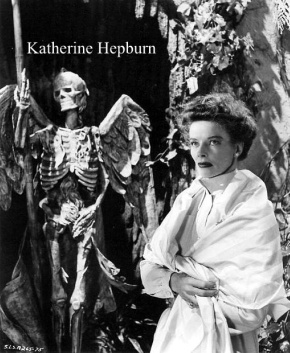
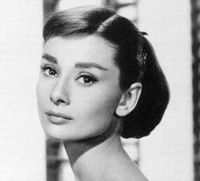
In the movies, the role of women was very much like their role in traditional European Fairy Tales—the beautiful princess who has to be rescued by the handsome prince. In Audrey Hepburn's case in Charade, that was done by the actor Cary Grant. Katherine Hepburn's character in Suddenly Last Summer represented a woman who had wealth (power) but was unable to use that power to accomplish her goals, and ends up insane. Interestingly, not the character—but the actress herself, was probably one of the most personally powerful women of her time. And speaking of beauty, I'm surprised you didn't mention the younger star of Suddenly Last Summer—Elizabeth Taylor.
Staying with the 1960s, one of the iconic female figures was a British model, Twiggy, famed for her, well, “twiggy” figure. Looking at the women you've mentioned, as well as Twiggy, they share an elegant slenderness combined with very carefully cultivated fashion. Recall too, the fashion was not their own creation, but reflected the work of well known designers and the efforts of professional photographers. Hold that thought because I'll come back to it as we return to the twenty-first century. But notice the clothing was often restrictive in terms of movement, emphasizing the domestication of females. Looking at all of them from fifty years of perspective, they project a delicate quality, where they appear to require protection. They also appear quite young. Their female bodies don't look completely developed—even Katherine Hepburn—they share a body outline more like an adolescent boy—breasts are not that noticeable and the waist is very small.
This sort of “push/pull” of power and independence is something we've seen even earlier. When the oppression of women starts to change, the visual appearance does as well—the classic “Venus” (well nourished with distinct curves) that emphasizes fertility and motherhood, is exchanged for a variant of male (boy), as a way of claiming power. For example, the 1920s saw the rise of the “flapper,” where women took on a more assertive (male) role following World War I, where there had been a greater intercultural exchange. Notice the body outline resembles what we'll see again as idealized in the 1960s—where women moved from “better nourished (which ties them to the “mother” role and takes them out of the workplace) to a slender figure indicating the woman is not only NOT a mother, but actually looks virginal.
Some suggest this is tied to economics. In other words, if we look even further back to the early 1900s, you'll see the idealized female form, such as in the work of Charles Gibson's “Gibson's Girls” shows an “hourglass” figure. When women tended to gain power, but then the economy tanks, women return to the “overly feminized” appearance. The flapper hits the great depression, and by the 1950s, you'll see the very large breasted film stars like Jane Russell—a return to the “hourglass figure.”
Jumping forward, by the 1990s (after positive economic times) one sees a very different type of female role, popularized by Buffy the Vampire Slayer, and Xena, Warrior Princess. The creator of Buffy stated he wanted to “reverse” the standard role of the blonde cheerleader of horror films who was immediately killed by monsters/murderers in older films, to push the idea of a woman who really didn't need the direct help of a man to fight her enemies. Like a young Audrey Hepburn, or a young Françoise Hardy, the actress playing Buffy also had a very slender body, but this was played off against the idea she had magical super strength.
Currently, like Madonna before her, Lady Gaga uses fashion and appearance as an ironic comment on society. This reflects the way by role-playing, the leather community, or others active in BDSM can result in a “reversal of power,” where a “bottom” appears in a powerless position to the view of an outsider, but because the behavior is consensual, on a meta-level, the “bottom” is “in charge.” Both Madonna and Lady Gaga are not afraid to play with a wide range of female (and male) imagery to express themselves, all the time give a very overt message of their own power. To put it another way, famous females of the 1960s were in some ways, the “products” of others (usually male), but both Madonna and Lady Gaga have made it part of their persona to be in charge of their own appearance and clothing. Having said that, if you think about Madonna, she physically altered her body from being a bit “hourglass” when she first began, to an extremely low body fat/lean/strong physique as she has grown older. Lady Gaga is similar in age to a young Audrey Hepburn or Françoise Hardy, and her body reflects this.
Why does a gay man feel a strong appeal in the women you've mentioned? Certainly there are different reasons for different individuals. But some therapists might suspect there are some gay men who have grown up with a fantasy of being taken care of by a strong man. The “script” of the movies lays out the idea if you dress correctly, if you're pretty, and not able to really take care of yourself, you'll attract a powerful male who will provide for you. This is not precisely an issue of gender identity—most of these men aren't really interested in “becoming” a woman—but in obtaining the benefits of such a role—just as many females have envied the benefits of being male in western culture. Katherine Hepburn, for example, set a standard early on in her personal life and career of wearing “men's clothing” (i.e., slacks/pants) at a time when women were socialized into wearing dresses. Historically, when women “cross-dressed,” they tended to gain power, while when males “cross-dressed” they did so for comic effect, and tended to lose power—this is seen over and over again in older films when male actors dressed in drag—for example, Some Like It Hot. Many therapists also encounter men who are tired or frustrated with having to deal with the gender stereotypical obligations and pressures of being male in western society, and can fantasize with turning dominance over to someone else. I can't begin to tell you how often one sees the CEO or president of a major corporation who leaves work to pay a dominatrix to humiliate him and order him around. For some gay men, it may feel like a vacation to "step into the high heels" of these female characters and step away from the pressures of being male.
On an aesthetic level, the female performers you've mentioned tend to have “large eyes” which is “hard-wired” into humans as attractive and child-like (which then engenders in adults a desire to care for them or help them). For example, if you look at photos of very young children, the size of their eyes in relationship to their faces is very different from the relationship of eyes in an adult face. You'll also see this in many puppies and kittens, which again, “reads” as attractive to humans. Make-up artists try very hard to make eyes of their clients look as large as possible with cosmetics. Being younger is also a part of a “power differential” where the young tend to have less power than mature adults, and adults are socialized to “take care” of young people. In research in evolutionary biology, there's the idea humans unconsciously pay attention to skin texture and tone as a sign of physical health and therefore, a better breeding partner. If you look at all the women you've mentioned, their skin appears flawless—which is one of the functions of good make-up—to cosmetically give the appearance of “healthy” skin. This is yet another part of their attraction.
As I have said a number of times to a friend of mine, “The fact the iris is my favorite flower, and I find it beautiful, doesn't mean I want to have sex with one.” Just so, for a gay man, there can be a sense of admiration for a female's beauty, but not an erotic response. For gay men who feel an arousal from a well-bellied man, fat admirers might find a professional male model impressive, but not erotic.
And finally—do I really see a “death” of the popularity of frail beauty we saw in say, Audrey Hepburn? I suspect we'll see (over the years) an ebb and flow of what people find attractive, and just as there have always been individuals who find a body with curves attractive, there will always be individuals drawn to slender frailness. As the American and European economy worsens, I'm not at all surprised to see more and more “curves” on both women and men.
I hope you continue to enjoy your fascination with these very talented and very beautiful woman—think about it as enjoying an excellent glass of champagne. It won't serve as your full meal as a gay man—but it can bring you a great deal of pleasure.
Actually, I have been curious about how many “teen heart throbs” have a level of feminine, delicate slenderness. The most recent example of this would be Justin Beiber. As these male actors/singers mature into adulthood, they frequently lose their original audience. Pre-teens (especially girls and I would include gay boys) aren't really clear on what sex is all about, and so focus on a non-sexual romantic “crush” that can be projected onto the “squeeky-clean” slender young male actors/singers. By the time a young woman (or man) is ready to fantasize about sex, or to actually experiment with sex, it usually is not going to be with a partner who appears to be a pre-adolescent. This is one of the reasons the “bad boy” feels more erotic to people who have moved past puberty.
I hope you continue to enjoy your fascination with these very talented and very beautiful woman—think about it as enjoying an excellent glass of champagne. It won't serve as your full meal as a gay man—but it can bring you a great deal of pleasure.
Subscribe to:
Posts (Atom)